Monday, January 7, 2019

January 7, 2019

Location: Viera Wetlands

I'm a male Boat-tailed Grackle
I like to practice polygyny.
I have many females who I get down with
And in theory, many progeny.

Sources: Cornell Lab - All About Birds - Boat Tailed Grackle

Photo and text © 2018 Dee Fairbanks Simpson

Sunday, January 6, 2019

January 6, 2019

Location: Viera Wetlands

I am a Tricolored Heron with an Alligator,
We're living side by side in peace.
I'm unafraid, at least for now,
Until the Alligator decides he's hungry!

Photo and text © 2018 Dee Fairbanks Simpson

Saturday, January 5, 2019

January 5, 2019

Location: Viera Wetlands

We are Common Gallinules
In the water, we swim like ducks.
But we don't have webbed feet like they do,
And our call is a whinnying "cluck".

Sources: Cornell Lab - All About Birds - Common Gallinule

Photo and text © 2018 Dee Fairbanks Simpson

Friday, January 4, 2019

January 4, 2019

Location: Viera Wetlands

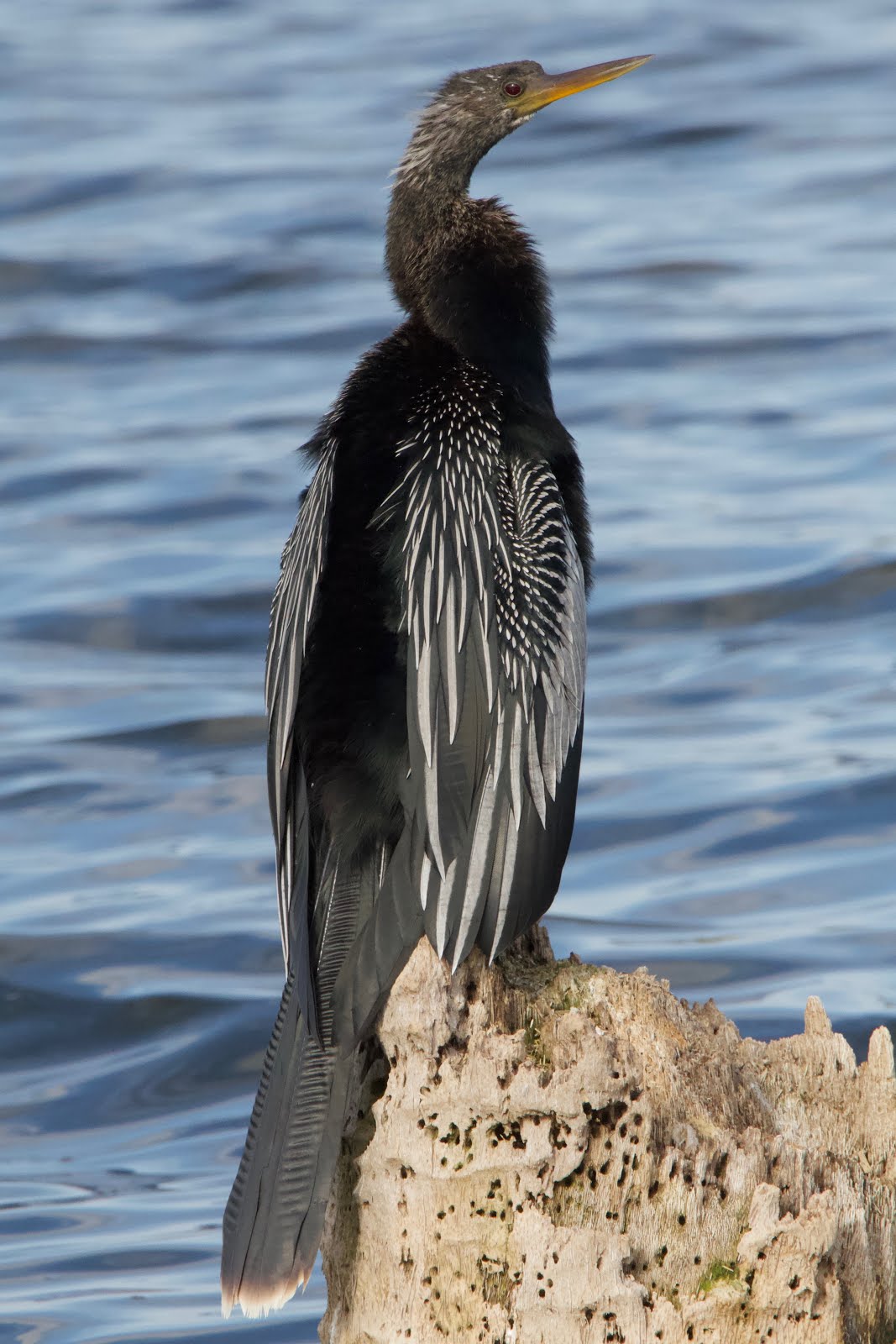
I am known as an Anhinga
My feathers aren't waterproof and I have dense bones.
This helps me submerge slowly when I hunt,
For fish, crustaceans and toads.

Sources: Cornell Labs - All About Birds - Anhinga

Photo and text © 2018 Dee Fairbanks Simpson

Thursday, January 3, 2019

January 3, 2019

Location: Viera Wetlands

I'm an adult Purple Gallinule,
I'm an amazingly good and strong flier.
I live in Florida, but I can fly out of my range
If my food situation is dire.

Sources: Cornell Lab - All About Birds - Purple Gallinule

Photo and text © 2018 Dee Fairbanks Simpson

Wednesday, January 2, 2019

January 2, 2019

Location: Vero Beach Wetlands

I am known as a Wood Stork
In flight you might mistake me for an Ibis.
But I have a black head and more black on my wings,
The Ibis just has black on his wing tips.

Sources: Cornell Lab - All About Birds - Compare Wood Stork and White Ibis

Photo and text © 2018 Dee Fairbanks Simpson

Tuesday, January 1, 2019

January 1, 2019

Location: Vero Beach Wetlands

On the left is a Great Egret, on the right a Tricolor,
They appear to both be the same size.
But the Tricolor is in water to his ankles,
And the Great Egret is up to his thighs.

(This picture illustrates the concept that often binoculars, or in this case a camera lens,  can distort the size of a bird. I know that Great Egrets are larger than Tricolored Herons, but it wasn't till I looked closely that I could see why they appearer to be the same size.)

Photo and text © 2018 Dee Fairbanks Simpson